MightyBit / Labs

Independent research

Research, ideas and open questions.

A place for my studies, mathematical explorations and personal notes.

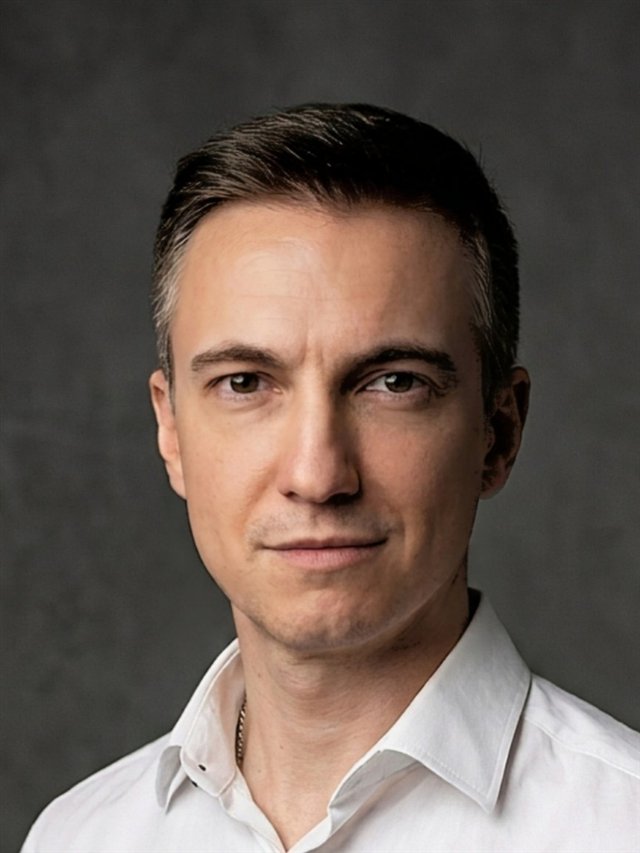
Portrait of Alexander Sellmeier

01 /Studies

PRISM

PRISM · v1.2.0

Parity-Reduced Invariant Symmetry Model

What can a few parity values tell us about a much larger binary state? PRISM studies exact reductions in a family of finite update systems, with the assumptions and limits made explicit.

PDF · v1.2.0 · Manuscript snapshot: November 18, 2026

One finite example · n = 3 · fixed common shift

64→16→4
initial pairsafter one updateafter two updates
Counts of distinct images under the specified two-node update. The four-state image is invariant; individual states need not be fixed.
Scope and formal verification

PRISM investigates a family of coupled affine systems over 𝔽₂. For every odd node size and known fixed common shift, the two initial parity bits determine every state from the second update onward. The first update equates the two nodes' internal even-parity components; the second cancels them modulo 2. On multi-node graphs, parities evolve under A while internal coordinates evolve under I + A, with fixed shifts contributing translations. The construction connects this exact four-state factor with the antipodal classes of the binary hypercube. A comparison with general projectors delineates which properties follow specifically from the parity choice. For the central identities, the manuscript documents the corresponding Lean 4 proofs.

The formal results establish consequences of explicit mathematical assumptions. They do not establish a physical interpretation.

Inside PRISM

A small rule. A precise construction.

PRISM starts with a small rule on binary states: flip every bit when the total parity is odd. The work asks what this rule preserves, what changes when systems are coupled, and when a few parity values determine a later state.

Two ways to read

The mathematical account (PDF) ↗

Definitions, assumptions and proofs in the current manuscript.

The PDF and Lean sources (ZIP)

The same manuscript, formal sources and recorded build evidence for closer review.

Release provenance and SHA-256 hashes

Publication & archive status

02 /Behind the work

Why PRISM · A personal starting point

Looking for connections.

I have been fascinated by science and the unknown since childhood. My background is in IT, with no formal academic training in mathematics or physics. What has always drawn me forward is a habit of looking for connections across apparent differences, and a persistent curiosity about the discrete order that might lie beneath complexity.

Read the personal story

My instinct is to put mind before matter: to begin with ideas, relationships and structure. I have always been convinced that the key to uncovering the discrete rules behind reality is not a single golden object buried in a garden, waiting to be found. I imagine it as a kind of mathematical DIY construction, almost magical in what it might reveal, assembled from the precise building blocks of algebra and information theory already at hand. The challenge is to understand how those pieces fit together.

PRISM grew from that curiosity. I am drawn to reversing a familiar question: rather than asking only how order emerges from chaos, could our reality be a particular stage of an informational development? My starting intuition is that the dynamics and entropy we experience might belong to a particular regime, rather than describe the deepest organising principle. I hold that as a philosophical starting point; PRISM's mathematical claims have their own explicit assumptions and standards of proof.

I believe AI is changing what a determined individual can explore. Curiosity, persistence and the willingness to stay with a difficult question can now take an idea further than before. For me, that also means respecting, embracing and following the methods and standards of every field the question touches.

I try to imagine freely, follow connections, and let the evidence decide which ideas survive.

A short introduction

Alexander Sellmeier is an independent researcher with a background in IT and a lifelong curiosity about science. Drawn to connections across fields, he explores whether simple, discrete structures can reveal order beneath apparently complex behaviour. His work on PRISM brings that curiosity into mathematical constructions, computational experiments and formal verification, with AI as a tool for exploration and learning.

03 /Contact

For questions about the work, you can contact Alexander Sellmeier by email.